Turquoise Mines List
Turquoise Mines List
Turquoise Mines Located In America
Mines Located in Arizona | Mines Located in California
Mines Located in Colorado | Mines Located in Nevada
Mines Located New Mexico | Mines Located in Utah
Global Turquoise Deposits
Afghanistan | Armenia | Australia | Brazil | Chile | China | Egypt | Iran (Persian) | Israel | Mexico | Russia | Siberia | Tibetan |Turkey
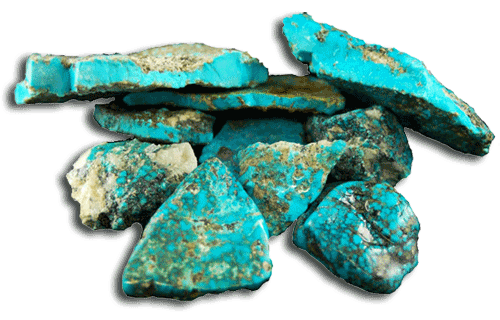
Turquoise Mines
Turquoise in America was originally found by Native American Indians of the Southwestern United States. The Turquoise mines first set up in America were hand mined with primitive tools. Turquoise was originally found in New Mexico and Colorado. The earliest Turquoise Mine being in what is now known as Cerrillos, NM. Turquoise Beads have been found at the Chaco Canyon Site dating back over prior to 900 A.D. The Cerrillos Turquoise mines are still being mined on occasion, but not in production.
In the late 1800's, the Navajo Indians started using Turquoise in their silver Jewelry and shortly after a market for Southwest Native American Turquoise Jewelry was born. Soon after that the demand for Turquoise grew exponentially and prospectors began opening Turquoise mines in Arizona, Nevada, New Mexico and Colorado. Today most of these Turquoise mines are closed.
Turquoise Mines List
View Durango Silver Companies Turquoise Mine list to see where American Turquoise Mines are located, a description of each Turquoise Mine and photos of the Turquoise from each of the Turquoise Mines. Our Turquoise Mine List is organized by State: Arizona Turquoise Mines, Nevada Turquoise Mines, New Mexico Turquoise Mines, Colorado Turquoise Mines, California and Utah Mines. We also have information on Global Turquoise Mines.
This Turquoise facts section of the site will help you find the locations of Turquoise Mines and sources of Turquoise. Most Turquoise deposits are in arid to semi-arid regions in igneous rock formations that contain high copper concentrations. Deposits of Turquoise can be found in America, Afghanistan, Africa, Armenia, Australia, Brazil, Chile, China, Egypt, Europe, Iran, Israel, Kazakhstan, Mexico, Russia, Siberia, Tanzania, and Turkey.
Turquoise Facts:
General Turquoise Facts | Turquoise Mines List | Turquoise Grades & Treatments | Turquoise Color Chart | Turquoise Healing | Turquoise Spiritual Facts | Turquoise Symbolism | Physical Properties of Turquoise | American Turquoise | Arizona Turquoise | California Turquoise | Colorado Turquoise | New Mexico Turquoise | Nevada Turquoise | Utah Turquoise | Chinese Turquoise | Persian Turquoise | Ancient Turquoise History | USGS History of Turquoise | Ribbon or Boulder Turquoise | Carico Lake Turquoise | Nevada Green Turquoise
Gemstone & Jewelry Facts:
Bead Jewelry | Gemstone Facts | Birthstones | About Turquoise Earrings | About Turquoise Rings | About Turquoise Gold Rings | Southwest Jewelry | Inlay Turquoise Jewelry | Mens Turquoise Bracelets | Royston Turquoise Jewelry | Vintage Turquoise Jewelry | Mineral Testing | Stones We Use In Our Jewelry
Southwestern Jewelry Facts:
American Silver Smiths | General Native American Silversmith Information | Hopi History | Navajo Silversmith History | Santo Domingo History | Western Silver Information | Zuni Native American Jewelry | Mexican Silver Information | Chilchimbito Trading Post | Fort Defiance Trading Post | Why Buy From Us? | How Too Make Beads
Thank you for your interest in Turquoise mines. We hope this navigational page about Turquoise mines will lead you in the proper direction.